Tuesday, August 10, 2010

Foundational Truths – God – Love

This attribute of God is virtually universally known or at least proclaimed; yet many who rest in its certainty actually know little about it.  Yes God is love but what exactly does that mean?  Does His being love make Him a benevolent grandfather?  Is His being love allow one to cover all manner of ill with the “warm blanket” of God is love?  Well let’s see.

Webster’s 1828 states of love:

As a verb -  In a general sense to be pleased with; to regard with affection, on account of some qualities which excite pleasing sensations or desire of gratification.

This is seen as in the greatest commandment “And he said to him, "You shall love the Lord your God with all your heart and with all your soul and with all your mind.  This is the great and first commandment.  And a second is like it: You shall love your neighbor as yourself.”  (Matt 22:37-40).

In this case love is an action or something you do.  I think the confusion comes in because we have weakened the meaning by attributing love to a strong like as in “I really love french fries, or golf, or NASCAR, or … you get the idea.”  In short, we love whatever gives us pleasure and delight, whether animal or intellectual; and this type of love i.e. action, certainly is attributable to God as well in that He demonstrates His love for us Rom 5:8.  But God also loves all mankind in a general sorta way, He sends rain to the just and unjust alike (Matt 5:45).

But the Scriptures declare that God is love (1 Jn 4:16) not that He merely loves.  And this gets to the essence of who God is.  The theme of the entire Bible is the self-revelation of the God of love. In the garden of Eden, God commanded that they must not eat of the tree of the knowledge of good and evil, if you do you will die (Gen 2:17). Yet when they disobey Him God seeks Adam and Eve, not to kill them but to reestablish a relationship, now broken, with Him. The God who loves seeks to bridges the gap.

That seeking and bridging reaches its pinnacle when God sends his Son into the world to rescue sinners and to provide them with eternal life (John 3:16; Ro 5:7, 8; Eph 2:1-5). John declares, "This is how we know what love is: Jesus Christ laid down his life for us" (1 John 3:16).   

However, God’s love is tempered by His wrath so that those who refuse Him will be judged and condemned, for God will not excuse sin.  And those who view God ultimately as a benevolent grandfather make a serious mistake

Monday, August 9, 2010

The Heinous Sin of Profane Cursing and Swearing

Many today believe it is ok to use curse words in everyday interaction.  I am not really sure where this came from but it has even found its way from the pulpit by many well known and “respected” pastors.  I do not mean to over simplify the position but doing so, they say, allows them to contextualize their message and making it relevant to the audience.  There are a couple issues with this reasoning the least of which is God’s word is already relevant so it is the preacher’s job to just convey it and let God work in the lives of whom He chooses.

This message by George Whitefield caught my eye for a couple reasons first of which is that it was delivered in the 1700’s which indicates the phenomenon is not new.  I am not really sure I was surprised though since man is man and there really is nothing new under the sun. 

So for the next few weeks we will be presenting The Heinous Sin of Profane Cursing and Swearing by George Whitefield.  Taken from the text of Matt 5:34 – Enjoy (I apologize in advance for the necessary post breaks).


The Heinous Sin of Profane Cursing and Swearing
George Whitefield


Matt 5:34 -- "But I say unto you, Swear not at all."

Among the many heinous sins for which this nation is grown infamous, perhaps there is no one more crying, but withal more common, than the abominable custom of profane swearing and cursing. Our streets abound with persons of all degrees and qualities, who are continually provoking the holy one of Israel to anger, by their detestable oaths and blasphemies: and our very children, "out of whose mouths," the psalmist observes in his days, "was perfected praise," are now grown remarkable for the quite opposite ill quality of cursing and swearing. This cannot but be a melancholy prospect, for every sincere and honest minister of Jesus Christ, to view his fellow-creatures in; and such as will put him on contriving some means to prevent the spreading at least of so growing an evil; knowing that the Lord (without repentance) will assuredly visit for these things. But alas! what can he do? Public animadversions are so neglected amongst us, that we seldom find a common swearer punished as the laws direct. And as for private admonition, men are now so hardened through the deceitfulness of sin, that to give them sober and pious advice, and to show them the evil of their doings, is but like "casting pearls before swine; they only turn again and rend you." Since matters then are come to this pass, all that we can do is, that as we are appointed watchmen and ambassadors of the Lord, it our duty from time to time to show the people their transgression, and warn them of their sin; so that whether they will hear, or whether they will forbear, we however may deliver our own souls. That I therefore may discharge my duty in this particular, give me leave, in the name of God, humbly to offer to your most serious consideration, some few observations on the words of the text, in order to show the heinousness of profane cursing and swearing.

(continued)

Friday, August 6, 2010

Your Friday Phil-lips

As it is customary here at The Old Dead Guys, on Friday's we like to search the archives over at Pyro's vault and in snooping around found this.  It is a great post presented to us by Dan Phillips over at Pyro via the Way Back Machine.  This will give us all something to think about over the weekend.


What is an "antinomian"?
Dan Phillips
3-28-08

The word "antinomian" isn't thrown around quite as freely. Maybe because (unlike legalism) it's not much of a dodge to hide behind. You can't get much mileage, when a brother is exhorting you to take the Word to heart on some point, by calling him an "antinomian."

It is, however, misused as a dismissive way of refusing to deal seriously with other Biblically-based positions. If you can successfully label a person (or school) "antinomian"... well, he's bad, and that's that. So you don't need to think too hard about it.

It also is of course properly used of schools that are antinomian; and they are bad. Once again, then, what matters is using the word correctly — which, again, depends on defining it correctly.

So here are some proposed definitions. Note: they all have to do with Christian living, not how to become a Christian. None has to do with how to get saved, but with how to live as a Christian.

By popular usage (and with some overlap), an antinomian is...

  1. Anyone who believes that Christians are not obliged to obey any part of the Law of Moses qua Law-of-Moses 
  2. Anyone who believes that Christians are not obliged to obey the moral division of the Law of Moses qua Law-of-Moses 
  3. Anyone who believes that Christians are not obliged to obey the commands of Christ and the apostles 
  4. Anyone who believes that Christians are not obliged to obey any law 
  5. Anyone who sets the leading of the Holy Spirit in opposition to obedience to any rule or law, whatever the source or location 
  6. Anyone who sets grace in opposition to obedience to any written word of God 

As before, in the meta, tell us:

  • Which of these have you heard most frequently? 
  • Which do you think is (or are) accurate and legitimate uses — and on what basis? 
  • Which do you think are inaccurate and illegitimate — and on what basis? 

Again, have at it.


Thursday, August 5, 2010

Terminology – Asceticism

Today’s word is not to be found in Scripture, yet it is very attractive to the Christian especially those who do not wish to be soiled by this world.  However it is spoken against at least in principle by the Scriptures and lies in direct opposition to how God has ordained we live until He shall appear.  Asceticism is not spoken of much today yet its subtleties are nonetheless present with us all.  So let’s begin. 

Webster’s 1828 states that an ascetic is one who:

– One who retires from the customary business of life, and devotes himself to the duties of piety and devotion; a hermit; a recluse.

Now one might say “oh a retiree who has worked out their life and now gets to sit back take it easy and see the world.”  But not so fast, don’t miss the end “a hermit, a recluse” not to mention that retiring from toil is not a biblical principle but one to which I look forward to anyway, but I digress. 

An ascetic is someone who withdraws from the world and basically lives like a monk or some guru on a mountain top contemplating his belly button trying to get to his inner self.  For the Christian though we are commanded to live in this world in order that He through us might accomplish His purpose i.e. save His chosen in the world.  The phrase “Be in the world but not of the world” is very apropos because it at once demonstrates the believer’s condition as well as his struggle.  In other words our condition is as aliens in this world (Heb 11:13; 1 Pet 1:17) and at the same time not to be tainted or stained through the contact we have of the world.

As Christ was praying in the garden you will notice He did not ask the Father to remove all who believe.  Instead He asked only that we be kept from the evil one (John 17:15).  And if you wont’ ask why I will “why.”  Well … I don’t know.  But, He has ordained that man be saved through the preaching of the Gospel (1 Cor 1:21) and that preaching be accomplished through man (Rom 10:14-15) and He has commissioned every believer to be His witness so that one can see how hard all of this becomes if we withdraw from the world.

But many of us do just that, we only associate with other believers (or professors), we only listen to “Christian” radio (don’t get me started on that one), we have Christian dentists, use Christian dry cleaners, and all the while become offended that an unbeliever actually has the gall to use profanity in our presence.  Oh the outrage.

No. No. we are told to go out and mingle with these “undesirables,” actually rub elbows with them, yes even buy them lunch (none of this “you pay I’ll pray” business).  Actually meet our neighbors, however strange they may seem, for you will never know how strange you look till you get on their side of the fence.  And while we’re at it don’t beat them with your bible.  It’s not the beating of the Word that wins souls its gentle correcting (2 Tim 2:25) with the Word that perhaps God may grant them repentance.  So get out there, get in the field, it is already “white for harvest.”

Wednesday, August 4, 2010

Is Preaching too 'old School' for Today

Recently, I was asked if I thought preaching was to “old School” to be effective for today.  And as you may expect I could not just say no and move on but today I wanted to present my answer to that question especially in light of the fact that many today believe we need so much more than just the simple preaching of the Gospel.  That somehow man has intellectually advanced beyond such a simple means to an end and need to …well … put some lipstick on it to dress it up. 

So here goes.

The term “old school” is really a subjective quantity; nevertheless this term does describe preaching today in the ears of many.  It is not the fault of the true preacher of the Word though nor of the Word that is proclaimed but a negative commentary of the last days in which we live.  The Scriptures tell us that in the last days there shall be a “falling away” (2 Thess 2:3) prior to the “the day of the Lord.”  This falling away or “rebellion” Paul notes to Timothy, manifests itself in people being “lovers of self, lovers of money, proud, arrogant, abusive, disobedient to their parents, ungrateful, unholy, heartless, unappeasable, slanderous, without self-control, brutal, not loving good, treacherous, reckless, swollen with conceit, lovers of pleasure rather than lovers of God, having the appearance of godliness, but denying its power” (2 Tim 3:2-5).

These “evil men” states Paul, will go from bad to worse which one may expect.  In spite of this though, he encourages Timothy to “preach the word” for the time will come when they (most likely those of Ch 3) will not endure or put up with “sound doctrine.”  They will instead be driven by their own desires to seek teachers who will satisfy their “passions”; they will turn away from truth to follow “myths” (2 Tim 4 1-4).  Now in noting that the “time will come” when they will not endure certainly implies a time when they would, making them little more than moralists since it is the rejection of God and His word from which they turn. 

Had they been believers in possession of the Holy Spirit they would have endured (through His power) and not turned away.  And while preaching is foolish to them that perish (1 Cor 1:18), to those who are called of God preaching is the very means by which they are saved.  For how can they believe on Him whom they have not heard and how can they hear without a preacher (Rom 10:14)?  The one who preaches the very “foolishness” the fool rejects.

So the ultimate purpose of God through the preaching of His word is the revelation of Christ to the world in general and to His elect specifically.  Therefore, the ultimate purpose of the preacher is to accurately present His word as an under Shepherd that would not be ashamed of his work unto the Lord (2 Tim 2:15).  It is his calling to present the whole counsel of God’s word (Acts 20:27) for it is “profitable for teaching, for reproof, for correction, and for training in righteousness, that the man of God may be competent, equipped for every good work” (2 Tim 3:16-17).  Preaching is the means God has ordained by which His ends (the saving of many) are accomplished. 

So no preaching is not old School at all.

Tuesday, August 3, 2010

Foundational Truths – God – Longsuffering

As we begin looking at another attribute of God I am reminded that this particular attribute is misunderstood by the unbelievers and taken for granted by many believers.  Hopefully you will see what I mean as the text unfolds.

As customary Webster’s 1828 states of Longsuffering as –

   –  Bearing injuries or provocation for a long time; patient; not easily provoked.

There really is not much more to say for human history demonstrates God’s patient longsuffering toward us.  What can be added though is His reason for being so which really is a twofold purpose.  1) He is longsuffering not willing that any should fall into judgment.  Peter addresses this in 2 Peter 3:9 in response to the mockers of v 2 which say that Christ is not returning.  So that Peter directly implies that judgment also comes with the coming of Christ. 2) That God’s patient longsuffering (i.e. kindness) leads to salvation (or is meant to). 

Now one may ask that if God is Sovereign then why does it not lead to salvation rather than it is meant too.  That is a very good question the answer to which should come up in about 8 weeks so hold on we will get there I promise.  But suffice it to be for now to note that it does lead to salvation to those whom the Father calls (Jn 6:37; 44) and to the rest no amount of patience will be enough since they will actively refuse His call (Mt 23:37).

We also must note that God’s longsuffering is an act of kindness toward those who are lost since if He were not so they would immediately fall into judgment and condemnation.  I am reminded of the account (told as true) of the atheist who challenged God that if He existed to prove it by striking him dead within 5 minutes.  As the time came and went the atheist stated this was proof that God does not exist to which a wise saint stated “my good man do you suppose you could exhaust God’s patience in a mere 5 minutes?” 

No indeed not but there is coming a time when His patience will end but for now today is the day of salvation and now is the acceptable time (2 Cor 6:2).

“The LORD, the LORD God, compassionate and gracious, slow to anger, and abounding in loving kindness and truth;  who keeps loving kindness for thousands, who forgives iniquity, transgression and sin” Ex. 34:6-7.

Monday, August 2, 2010

A New Old Dead Guy

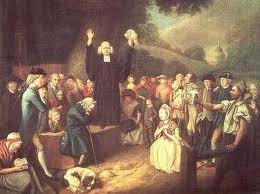
Well good day to you.  Here it is Monday again and as you may be accustomed we will present the work of an old dead guy.  Oh but which one, that is the quandary for there are many to select from.  I have however chosen a man whom God used mightily during the 1st Great Awakening and is credited with great oratory skill even though many churches of his day would not let him in the Pulpit.  That man George Whitefield

Today I wanted to give a brief introduction to him and next week we will look a selected sermon.  

George Whitefield 1714 – 1770

- was born and raised in Gloucester, England, in the most difficult circumstances. His father, a public tavern owner, died when George was two and his widowed mother re-married eight years later, but the relationship was plagued with grief and ultimately ended in divorce. His early years gave him little value in a formal education yet at the age of 17 he managed to enter in to studies at Oxford University

At Oxford he became serious about spiritual things joining the ‘Holy Club’ with the Wesley brothers, who became life-long friends. The group was not evangelical but was more for seekers and enquirers after true religion. The Wesleys’ seriousness of devotion provoked him to a deeper walk with God and he was the first in the group to recognize the difference between a legalistic religion and experiencing an inner change through the new birth in Christ. Nevertheless it took him a full year to make the transition from asceticism and human works designed to earn God’s favor, to receiving forgiveness and love by the unmerited grace of God.

He wrote, ‘Oh what joy – joy unspeakable – joy full and big with glory was my soul filled when the weight of sin came off, and an abiding sense of the pardoning love of God and a full assurance of faith broke in on my soul.’ After receiving ordination as a deacon in the Church of England in 1736, he began preaching on the necessity of the ‘New Birth.’

Whitefield's first sermon was preached in his home town and his great authority was immediately evident to all. He said, ‘I was enabled to speak with some degree of gospel authority. Some few mocked, but most seemed for the present struck; and I have since heard that a complaint was made to the bishop that I drove fifteen mad at  the first sermon!'

However Whitefield was not for England, and after a brief pastorate in Dummer, Hampshire he was encouraged by the Wesleys’ to visit the colony of Georgia in The New World, to assist in the care of an Orphan House which had been set up near Savannah for the children of colonists.

Heeding their encouragement, in 1737 at the age of  23 he sailed to America staying for a year and having departed would not return to America until 1739. During these first two visits he was led to begin open-air preaching and remarkable scenes began to accompany his ministry where thousands flocked to hear his irresistible eloquence and engaging fervor. Hundreds made professions of faith as they listened.

By late 1735 the New England revival had begun to decline; but Whitefield’s arrival heralded the second wave of blessing. His great and sudden fame had preceded him and he was in immediate demand. He began preaching in Philadelphia at once and thousands flocked to hear him. The population of the town did not exceed 12,000, yet his initial audiences are estimated to be numbered from 6,000 to 8,000!

He then embarked on a two year preaching itinerary and at just 25 years old he was aptly called ‘the boy preacher!’ His audiences grew progressively as he moved around the nation until he was captivating audiences of 20,000 and then up to 30,000! What Bishop Ryle said of his ministry in London was no less true here, “Whether on week-days or Sundays, wherever he preached, the churches were crowded, and an immense sensation was produced.”

He was tireless at his craft, in one six-week tour he preached over one hundred and seventy-five sermons to tens of thousands of people, leaving the region in a spiritual upheaval. It remains one of the most remarkable periods of American Christianity on record. His preaching ‘in season and out of season’ approach encouraged evangelical ministers of all denominations to follow his example. His free use of natural gestures, illustrations, and a more extemporaneous style permanently altered American evangelical preaching. He was also a preacher of extraordinary power and possessed a supreme ability to hold audiences, attracting people from every rank and station in life.

Benjamin Franklin, estimated that Whitefield could be heard clearly by up to thirty thousand people at one time wrote in his journal, “From being thoughtless and indifferent about religion, it seemed as if all the world were growing religious, so that one could not walk through Philadelphia in the evening without hearing Psalms sung in different families of every street.”