Showing posts with label George Whitefield. Show all posts

Monday, October 4, 2010

The Heinous Sin of Profane Cursing and Swearing Pt 9

Well here we are at the conclusion of Whitefield’s sober admonition to be mindful of our speech.  He has made clear that the swearing to which he refers is not that type before magistrates so that all swearing is not unlawful.  We have also dealt on a couple other occasions what we would consider profanity here1 and here2.  

But Whitefield has in mind that swearing which is falsely offered in His name calling it “profane and heinously sinful.”  He reasons that there is no temptation in nature to this sin, nor does the commission of it afford the offender the least pleasure or satisfaction.  It is a sin which may be so often repeated.  It hardens infidels against the Christian religion, and must give great offense, and occasion much sorrow and concern to every true disciple of Jesus Christ.  And it is an extremity of sin, which can only be matched in hell.  

Here now we have the conclusion of his piece:


The Heinous Sin of Profane Cursing and Swearing


Let me, therefore, once more address myself to every person here present, in the name of our Lord Jesus Christ; and if any amongst them have been any way guilty of this notorious sin of swearing, let me entreat them by all that is near and dear to them, that they would neither give the magistrate the trouble to punish, nor their friends any reason for the future to warn them against committing the crime; but keep a constant and careful watch over the door of their lips, and withal implore the divine assistance (without which all is nothing) that they offend no more so scandalously with their tongues. Let them seriously lay to heart, what with great plainness and simplicity has here been delivered: and if they have any regard for themselves as men, or their reputation as Christians; if they would not be a public scandal to their profession, or a grief to all that know or converse with them: in short, if they would not be devils incarnate here, and provoke God to punish them eternally hereafter; I say unto them in the name of our Lord Jesus Christ, "Swear not at all."

Monday, September 27, 2010

The Heinous Sin of Profane Cursing and Swearing Pt 8

Today as we continue with part 8 of The Heinous Sin of Profane Cursing and Swearing by George Whitefield, we will see Mr. Whitefield address one man’s duty to his neighbor to uphold right living and to set an example of godliness before him.  This duty he states is owed both to the neighbor but also to God.  So without further delay…


The Heinous Sin of Profane Cursing and Swearing 
George Whitefield


Matt 5:34 -- "But I say unto you, Swear not at all."


2. But further, if the sin of swearing is so exceeding heinous, and withal so common, then it is every particular person's duty, especially those that are in authority, to do their utmost towards discountenancing and suppressing so malignant a crime. The duty we owe both to God and our neighbor, requires this at our hands; by the one we are obliged to assert our Maker's honor; by the other to prevent our neighbor's ruin; and it is but doing as we would be done by, and as we ourselves act in cases of lesser consequence. 

Were we to hear either our own or our friend's good name vilified [slandered, maligned] and traduced [slandered, maligned], we should think it our bounden duty to vindicate the wronged reputation of each; and shall the great, terrible, and holy name of our best and only friend, our king, our father, nay our God: shall this be daily, nay every moment, defied and blasphemed; and will no one dare to stand up in defense of his honor and holiness? Be astonished, O heavens, at this! No; let us scorn all such base and treacherous treatment; let us resolve to support the cause of religion, and with a becoming prudent courage manifest our zeal for the honor of the Lord of Hosts. 

Men in authority have double the advantages of ordinary Christians; their very office shows they are intended for the punishment of evil doers. And such is the degeneracy of mankind, that the generality of them will be more influenced by the power of persons in authority, than by the most labored exhortations from the pulpit. To such, therefore, if there are any here present, I humbly address myself, beseeching them, in the name of our Lord Jesus Christ, to do their utmost to put a stop to, and restrain profane cursing and swearing. 

And though it must be confessed, that this is a work which requires a great deal of courage and pains, yet they would do well to consider, it is for God they undertake it, who certainly will support and bear them out in a due execution of their office here, and reward them with an exceeding and eternal weight of glory hereafter. But it is time to draw towards a conclusion.

-continued-

Monday, September 20, 2010

The Heinous Sin of Profane Cursing and Swearing Pt 7

It is evident by now (at least it should be) that Whitefield is specifically addressing the type of profane swearing in which our Lord is denigrated or used in a trifle manner.  He has not addressed words we would otherwise not care to hear as we have addressed those in a pair of prior of Terminology Thursday posts here and here.  But one has to wonder if we are as innocent as we would claim.  While we may not exclaim God ___, are we as quick to expunge the “oh my Lord” or the occasional “gosh darn?”  Consider, if we have only substituted words have we gained (or rather avoided) anything?  I’m not so sure.  Well enough from me…we now return to our sermon.


The Heinous Sin of Profane Cursing and Swearing


1. And first then, if these things be so, and the sin of profane swearing, as hath been in some measure shown, is so exceeding sinful, what shall we say to such unhappy men, who think it not only allowable, but fashionable and polite, to "take the name of God in vain;" who imagine that swearing makes them look big among their companions, and really think it a piece of honor to abound in it? But alas! little do they think that such a behavior argues the greatest degeneracy of mind and fool-hardiness, that can possibly be thought of.

For what can be more base, than one hour to pretend to adore God in public worship, and the very next moment to blaspheme his name; indeed, such a behavior, from persons who deny the being of a God, (if any such fools there be) is not altogether to much to be wondered at; but for men, who not only subscribe to the belief of a Deity, but likewise acknowledge him to be a God of infinite majesty and power; for such men to blaspheme his holy name, by profane cursing and swearing, and at the same time confess, that this very God has expressly declared, he will not hold him guiltless, but will certainly and eternally punish (without repentance) him that taketh his name in vain; is such an instance of fool-hardiness, as well as baseness, that can scarcely be paralleled.

This is what they presume not to do in other cases of less danger: they dare not revile a general at the head of his army, nor rouse a sleeping lion when within reach of his paw. And is the Almighty God, the great Jehovah, the everlasting King, who can consume them by the breath of his nostrils, and frown them to hell in an instant; is he the only contemptible being in their account, that may be provoked without fear, and offended without punishment? No; though God hear long, he will not bear always; the time will come, and that too, perhaps, much sooner than such persons may expect, when God will vindicate his injured honor, when he will lay bare his almighty arm, and make those wretches feel the eternal smart of his justice, show power and name they have so often vilified and blasphemed. Alas! what will become of all their bravery then?

Will they then wantonly sport with the name of their Maker, and call upon the King of all the earth to damn them any more in jest? No; their note will then be changed: indeed, they shall call, but it will be for "the rocks to fall on them, and the hills to cover them from the wrath of him that sitteth upon the throne, and from the Lamb for ever." It is true, time was when they prayed, though without thought, perhaps, for damnation both for themselves and others; and now they will find their prayers answered. "They delighted in cursing, therefore shalt it happen unto them; they loved not blessing, therefore shall it be far from them; they clothed themselves with cursing like as with a garment, and it shall come into their bowels like water, and like oil into their bones."

Monday, September 13, 2010

The Heinous Sin of Profane Cursing and Swearing Pt 6

As we have seen Whitefield states that cursing and swearing is made altogether more heinous in that it does not have any natural temptation.  We really must concede that observation for its only avenue for escape (cursing that is) is an unbridled tongue.  I would suppose (not to paint with a broad brush here) that one who has such a tongue also has a problem (i.e. sin) with other areas of speech such as gossip, slander, or lying (call them white lies if you wish but a lie don’t care who tells it).  To catch up on the post (highly recommended) look here.  So …Consider! 


The Heinous Sin of Profane Cursing and Swearing


IV. But it is time for me to proceed to give my Fourth and last reason, why common swearing is so exceeding sinful; and that is, Because it is such an extremity of sin, that can only be matched in hell, where all are desperate, and without hope of mercy.

The damned devils, and damned souls of men in hell, may be supposed to rave and blaspheme in their torments, because they know that the chains wherein they are held, can never be knocked off; but for men that swim in the river of God's goodness, whose mercies are renewed to them every morning, and who are visited with fresh tokens of his infinite unmerited loving-kindness every moment; for these favorite creatures to set their mouths against heaven, and to blaspheme a gracious, patient, all-bountiful God; is a height of sin which exceeds the blackness and impiety of devils and hell itself.

And now, after what has been here offered, to show the heinousness of profane cursing and swearing in common conversation, may I not very justly address myself to you in the words of the text, "Therefore I say unto you, Swear not at all;" since it is a sin that has no temptation in nature, nor brings any pleasure or profit to the committer of it; since it hardens infidels in their infidelity, and affords sad causes of grief and lamentation to every honest Christian; since it is a sin that generally grows into a habit, and lastly, such a sin that can only be matched in hell.


-continued-

Monday, September 6, 2010

The Heinous Sin of Profane Cursing and Swearing Pt 5

In prior installments we have seen Whitefield's charge that the sin of profane cursing and swearing does not offer the offender any pleasure or satisfaction and that it is a sin that is so often and easily repeated increasing its occurrence.  Next we look upon its affect upon the lost.  Consider!


The Heinous Sin of Profane Cursing and Swearing


III. But Thirdly, what makes the sin of profane swearing appear yet more exceeding sinful, is, that it hardens infidels against the Christian religion.

It is the Apostle Peter's advice to the married persons of his time, that they should walk as became the gospel of Christ, that those who were without, might be won to embrace the Christian religion, by seeing and observing their pious conversation coupled together with fear. And what the Apostle presses on married persons, we find elsewhere enjoined on each particular member of the church. Accordingly we are commanded by our blessed Lord, to "let our light to shine before men, that they may see our good works, and glorify our Father which is in heaven;" And the Apostle Paul bids us "walk circumspectly towards them that are without, redeeming the time;" that is, embracing all opportunities to do them good, "because the days are evil." But alas! in what a direct contradiction does the profane swearer live to this and such-like precepts, who, instead of gaining proselytes to Christ from the unbelieving part of the world, does all he can to oppose it! For how can it be expected, that infidels should honor God, when Christians themselves despise him; or that any should embrace our religion, when professors of it themselves make so light of one of its strictest commands? No; to our grief and shame be it spoken, it is by reason of such impieties as these, that our holy religion (the best and purest in itself) is become a by-word among the heathen; that the sacred authority of the holy Jesus and his doctrine is despised; and "God's name (as it is written) blasphemed among the Gentiles."

These cannot but be sad stumbling-blocks and offenses in the way of our brethren's conversion; "But woe be to those men by whom such offenses come." We may say of them, as our blessed Lord did of Judas, "It had been better for such men, that they had never been born;" or, as he threatens in another place, "It shall be more tolerable for Sodom and Gomorrah in the day of judgment, than for such sinners."

But this is not all; As profane swearing must undoubtedly harden those in their infidelity, that are without, so must it no less grieve and give great offense to those hones and sincere persons that are within the church. We hear of David's complaining and crying out, "Woe is me, that I am constrained to dwell with Mesech, and to have my habitation amongst the tents of Kedar;" that is, that he was obliged to live and converse with a people exceedingly wicked and profane. And St. Peter tells us, that "Lot's righteous soul was grieved day by day, whilst he saw and observed the ungodly conversation of the wicked." And no doubt it was one great part of our blessed Master's sufferings whilst on earth, that he was compelled to converse with a wicked and perverse generation, and to hear his heavenly Father's sacred name profaned and scoffed at by unrighteous and wicked men. And surely it cannot but pierce the heart of every true and sincere Christian, of every one that does in any measure partake of the spirit of his master, to hear the multitude of oaths and curses which proceed daily and hourly out of the mouths of many people, and those too, whose liberal education, and seeming regard for the welfare of religion, one would think, should teach them a more becoming behavior. 

To hear the great and terrible name of God polluted by men, which is adored by angels; and to consider how often that sacred name is profancd in common discourse, which we are not worthy to mention in our prayers; this, I say, cannot but make each of them cry out with holy David, "Woe is me, that I am constrained to dwell with Mesech, and to have my habitation amongst the tents of Kedar." And though the blasphemous and profane discourses of others, will not be imputed to sincere persons for sin, so long as they "have no fellowship with such hellish fruits of darkness, but rather reprove them;" yet it will greatly enhance the present guilt, and sadly increase the future punishment of every profane swearer, by whom such offenses come. 

For if, as our Savior tells us, "it had been better for a man to have a mill-stone tied around his neck, than that he should offend one of his little once, (that is, the weakest of his disciples) how much sorer punishment will they be thought worthy of," who not only cause God's name to be blasphemed among the Gentiles, and the religion of our dear Redeemer to be abhorred; but who make his saints to weep and mourn, and vex their righteous souls from day to day, by their ungodly, profane, and blasphemous conversation? Surely, as God will put the tears of the one into his bottle, so it will be just in him to punish the other with eternal sorrow, for all their ungodly and hard speeches, and cast them into a lake of fire and brimstone, where they shall be glad of a drop of water to cool those tongues, with which they have so often blasphemed the Lord of Hosts, and grieved the people of our God.

Monday, August 30, 2010

Pt 4 The Heinous Sin of Profane Cursing and Swearing

Well Summer finals are over and in the box.  I have but a short week to relax and then it's time for the Fall semester to being.  Anyway today we continue to look at Whitefield's work  The Heinous Sin of Profane Cursing and Swearing.   Here are parts One, Two, and Three.  Enjoy!


The Heinous Sin of Profane Cursing and Swearing pt 4


II. But Secondly, what increases the heinousness of profane swearing, is, that it is a sin which may so often be repeated.

            
This is another consideration which always serves to lessen or increase the guilt and malignity of any sin. It was some excuse for the drunkenness of Noah, and the adultery of David, that they committed these crimes but once; as, on the contrary, of the patriarch Abraham's distrust of God, that he repeated the dissembling [deception] of Sarah to be his wife, two several times. And if this be admitted as an aggravation of other profane crimes, surely much more so of the guilt of common swearing, because it is a sin which may be, and is for the generality often repeated. In many other gross sins it cannot be so: if a man be overcome in drink, there must be a considerable time ere he can recover his debauch, and return to his cups again: or if he be accustomed to profane the sabbath, he cannot do it every day, but only one in seven. But alas! the profane swearer is ready for another oath, almost before the sound of the first is out of our ears; yea, some double and treble them in one sentence, even so as to confound the sense of what they say, by an horrid din of blasphemy! Now if the great and terrible Jehovah has expressly declared that he will not hold him guiltless, that is, will assuredly punish him, that taketh his name but once in vain; what a vast heap of these heinous sins lies at every common swearer's door? It would be apt to sink him into an intolerable despair, did he but see the whole sum of them. And O what a seared conscience must that wretch have, that does not feel this prodigious weight!

-continued-

Monday, August 23, 2010

The Heinous Sin of Profane Cursing and Swearing


Well greetings to you all.  Today we will continue looking in to George Whitefield’s treatment of Matt 5:34 specifically his message The heinous Sin of Profane Cursing and Swearing.  Due to the nature of his writing style it will be necessary to break his sermon sometimes in an unusual place.  Therefore, it may be necessary for you to go back and review prior installments to keep the flow of his thought in context.  Here are the links to Pt 1 and Pt 2 if you need them.  So please consider… 


The Heinous Sin of Profane Cursing and Swearing - pt 3
George Whitefield


Matt 5:34 -- "But I say unto you, Swear not at all."


But to return: It appears then from the whole tenor of our Savior's discourse, that in the words of the text he does by no means disannul or forbid swearing before a magistrate (which, as might easily be shown, is both lawful and necessary) but only profane swearing in common conversation; the heinousness and sinfulness of which I come now, more immediately to lay before you.
            And here, not to mention that it is a direct breach of our blessed master's and great law-giver's command in the words of the text, as likewise of the third commandment, wherein God positively declares, "he will not hold him guiltless (that is, will assuredly punish him) that taketh his name in vain:" not to mention that it is the greatest abuse of that noble faculty of speech, whereby we are distinguished from the brute creation; or the great hazard the common swearer runs, of being perjured some time or other: not to mention those reasons against it, which of themselves would abundantly prove the folly and sinfulness of swearing: I shall at this time content myself with instancing four particulars, which highly aggravate the crime of profane swearing, and those are such as follow:

I. First, Because there is no temptation in nature to this sin, nor does the commission of it afford the offender the least pleasure or satisfaction.
II. Secondly, Because it is a sin which may be so often repeated.
III. Thirdly, Because it hardens infidels against the Christian religion, and must give great offense, and occasion much sorrow and concern to every true disciple of Jesus Christ.
IV. Fourthly, Because it is an extremity of sin, which can only be matched in hell.


I. The first reason then, why swearing in common conversation is so heinous in God's sight, and why we should not swear at all, is, because it has no temptation in nature, nor does the commission of it, unless a man be a devil incarnate, afford the offender the least pleasure or satisfaction.

            Now here, I presume, we may lay it down as a maxim universally agreed on, that the guilt of any crime is increased or lessened in proportion to the weakness or strength of the temptation, by which a person is carried to the commission of it. It was this consideration that extenuated and diminished the guilt of Saul's taking upon him to offer sacrifice before the Prophet Samuel came; and of Uzza's touching the ark, because it was in danger of falling: as, on the contrary, what so highly aggravated the disobedience of our first parents, and of Lot's wife, was, because the former had so little reason to eat the forbidden fruit, and the latter so small a temptation to look back on Sodom.
            And now if this be granted, surely the common swearer must of all sinners be the most without excuse, since there is no manner of temptation in nature to commission of his crime. In most of the other commands, persons, perhaps, may plead the force of natural inclination in excuse for the breach of them: one, for instance, may alledge his string propensity to anger, to excuse his breaking of the sixth; another, his proneness to lust, for his violation of the seventh. But surely the common swearer has nothing of this kind to urge in his behalf; for though he may have a natural inclination to this or that crime, yet no man, it is to be presumed, can say, he is born with a swearing constitution.
            But further, As there is no temptation to it, so there is no pleasure or profit to be reaped from the commission of it. Ask the drunkard why he rises up early to follow strong drink, and he will tell you, because it affords his sensual appetite some kind of pleasure and gratification, though it be no higher than that of a brute. Inquire of the covetous worldling, why he defrauds and over-reaches his neighbor, and he has an answer ready; to enrich himself, and lay up goods for many years. But it must certainly puzzle the profane swearer himself, to inform you what pleasure he reaps from swearing: for alas! it is a fruitless tasteless thing that he sells his soul for. But indeed he does not sell it at all: in this case he prodigally gives it away (without repentance) to the devil; and parts with a blessed eternity, and runs into everlasting torment, merely for nothing.

Monday, August 16, 2010

The Heinous Sin of Profane Cursing and Swearing


As we will see Whitefield begins his argument by looking at the common use of swearing in terms of an oath particularly swearing by that which is Holy.  And certainly we see the necessity of not issuing oaths if for no other reason that God commands us not to.  James echoes this (Jas 5:12) further adding that as believers our “yes” should mean “yes” and our “no” should mean “no”; as well as the testimony of our character should make swearing an oath superfluous.  He will also point out that our careless use of swearing, even the seemingly harmless garden variety, should not be tolerated.  


The Heinous Sin of Profane Cursing and Swearing – pt 2
George Whitefield

Matt 5:34 -- "But I say unto you, Swear not at all."


But, before I proceed directly to the prosecution of this point, it will be proper to clear this precept of our Lord from a misrepresentation that has been put on it by some, who infer from hence, that our Savior prohibits swearing before a magistrate, when required on a solemn and proper occasion. But that all swearing is not absolutely unlawful for a Christian, is evident from the writings of St. Paul, whom we often find upon some solemn occasions using several forms of imprecation, as, "I call God as witness;" "God is my judge;" "By your rejoicing in Christ Jesus," and suchlike. And that our savior does by no means forbid swearing before a magistrate, in the words now before us, is plain, if we consider the sense and design he had in view, when he gave his disciples this command.

Permit me to observe to you then, that our blessed master had set himself, from the 27 th verse of the chapter, out of which the text is taken, to vindicate and clear the moral law from the corrupt glosses and misconstruction of the Pharisees, who then sat in Moses's chair, but were notoriously faulty in adhering too closely to the literal expression of the law, without ever considering the due extent and spiritual meaning of it. Accordingly they imagined, that because God had said, "Thou shalt not commit adultery," that therefore, supposing a person was not guilty of the very act of adultery, he was not chargeable with the breach of the seventh commandment. And likewise in the matter of swearing, because God had forbidden his people, in the books of Exodus and Deuteronomy, "to take his name in vain," or to swear falsely by his name; they therefore judged it lawful to swear by any creature in common discourse, supposing they did not directly mention the name of God.

Our blessed Savior therefore, in the words now before us, rectifies this their mistake about swearing, as he had done in the verses immediately forgoing, concerning adultery, and tells the people, that whatever allowances the Pharisees might give to swear by any creature, yet he pronounced it absolutely unlawful for any of his followers to do so. "You have heard, that it has been said by them of old time," (namely, by the Pharisees and teachers of the Jewish law) "Thou shalt not forswear thyself, but perform unto the Lord thine oaths; but I say unto you," (I who am appointed by the Father to be the great prophet and true law-giver of his church) "Swear not at all, (in your common conversation) neither by heaven for it is God's throne; (and therefore to swear by that, is to swear by Him that sits thereon) neither by the earth, for it is his foot-stool; nor by Jerusalem, for it is the city of the great King; neither shalt thou swear by thy head, because thou canst not make one hair white or black: but let your communications (which plainly shows that Christ is here speaking of swearing, not before a magistrate, but in common conversation) let your communication be yea, yea; nay, nay, (a strong affirmation or negation at the most); for whatsoever is more than this, cometh of evil;" that is, cometh from an evil principle, from the evil one, the devil, the author of all evil.

Which by the way, methinks, should be a caution to all such persons, who, though not guilty of swearing in the gross sense of the word, yet attest the truth of what they are speaking of, though ever so trifling, by saying, Upon my life, -- as I live, -- by my faith, -- by the heavens, and such like: which expressions, however harmless and innocent they may be esteemed by some sorts of people, yet are the very oaths which our blessed Lord condemns in the words immediately following the text; and persons who use such unwarrantable forms of speaking, must expect to be convicted and condemned as swearers, at our Savior's second coming to judge the world.

-continued- 


Monday, August 9, 2010

The Heinous Sin of Profane Cursing and Swearing

Many today believe it is ok to use curse words in everyday interaction.  I am not really sure where this came from but it has even found its way from the pulpit by many well known and “respected” pastors.  I do not mean to over simplify the position but doing so, they say, allows them to contextualize their message and making it relevant to the audience.  There are a couple issues with this reasoning the least of which is God’s word is already relevant so it is the preacher’s job to just convey it and let God work in the lives of whom He chooses.

This message by George Whitefield caught my eye for a couple reasons first of which is that it was delivered in the 1700’s which indicates the phenomenon is not new.  I am not really sure I was surprised though since man is man and there really is nothing new under the sun. 

So for the next few weeks we will be presenting The Heinous Sin of Profane Cursing and Swearing by George Whitefield.  Taken from the text of Matt 5:34 – Enjoy (I apologize in advance for the necessary post breaks).


The Heinous Sin of Profane Cursing and Swearing
George Whitefield


Matt 5:34 -- "But I say unto you, Swear not at all."

Among the many heinous sins for which this nation is grown infamous, perhaps there is no one more crying, but withal more common, than the abominable custom of profane swearing and cursing. Our streets abound with persons of all degrees and qualities, who are continually provoking the holy one of Israel to anger, by their detestable oaths and blasphemies: and our very children, "out of whose mouths," the psalmist observes in his days, "was perfected praise," are now grown remarkable for the quite opposite ill quality of cursing and swearing. This cannot but be a melancholy prospect, for every sincere and honest minister of Jesus Christ, to view his fellow-creatures in; and such as will put him on contriving some means to prevent the spreading at least of so growing an evil; knowing that the Lord (without repentance) will assuredly visit for these things. But alas! what can he do? Public animadversions are so neglected amongst us, that we seldom find a common swearer punished as the laws direct. And as for private admonition, men are now so hardened through the deceitfulness of sin, that to give them sober and pious advice, and to show them the evil of their doings, is but like "casting pearls before swine; they only turn again and rend you." Since matters then are come to this pass, all that we can do is, that as we are appointed watchmen and ambassadors of the Lord, it our duty from time to time to show the people their transgression, and warn them of their sin; so that whether they will hear, or whether they will forbear, we however may deliver our own souls. That I therefore may discharge my duty in this particular, give me leave, in the name of God, humbly to offer to your most serious consideration, some few observations on the words of the text, in order to show the heinousness of profane cursing and swearing.

(continued)

Monday, August 2, 2010

A New Old Dead Guy

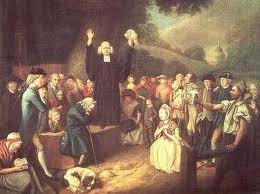
Well good day to you.  Here it is Monday again and as you may be accustomed we will present the work of an old dead guy.  Oh but which one, that is the quandary for there are many to select from.  I have however chosen a man whom God used mightily during the 1st Great Awakening and is credited with great oratory skill even though many churches of his day would not let him in the Pulpit.  That man George Whitefield

Today I wanted to give a brief introduction to him and next week we will look a selected sermon.  

George Whitefield 1714 – 1770

- was born and raised in Gloucester, England, in the most difficult circumstances. His father, a public tavern owner, died when George was two and his widowed mother re-married eight years later, but the relationship was plagued with grief and ultimately ended in divorce. His early years gave him little value in a formal education yet at the age of 17 he managed to enter in to studies at Oxford University

At Oxford he became serious about spiritual things joining the ‘Holy Club’ with the Wesley brothers, who became life-long friends. The group was not evangelical but was more for seekers and enquirers after true religion. The Wesleys’ seriousness of devotion provoked him to a deeper walk with God and he was the first in the group to recognize the difference between a legalistic religion and experiencing an inner change through the new birth in Christ. Nevertheless it took him a full year to make the transition from asceticism and human works designed to earn God’s favor, to receiving forgiveness and love by the unmerited grace of God.

He wrote, ‘Oh what joy – joy unspeakable – joy full and big with glory was my soul filled when the weight of sin came off, and an abiding sense of the pardoning love of God and a full assurance of faith broke in on my soul.’ After receiving ordination as a deacon in the Church of England in 1736, he began preaching on the necessity of the ‘New Birth.’

Whitefield's first sermon was preached in his home town and his great authority was immediately evident to all. He said, ‘I was enabled to speak with some degree of gospel authority. Some few mocked, but most seemed for the present struck; and I have since heard that a complaint was made to the bishop that I drove fifteen mad at  the first sermon!'

However Whitefield was not for England, and after a brief pastorate in Dummer, Hampshire he was encouraged by the Wesleys’ to visit the colony of Georgia in The New World, to assist in the care of an Orphan House which had been set up near Savannah for the children of colonists.

Heeding their encouragement, in 1737 at the age of  23 he sailed to America staying for a year and having departed would not return to America until 1739. During these first two visits he was led to begin open-air preaching and remarkable scenes began to accompany his ministry where thousands flocked to hear his irresistible eloquence and engaging fervor. Hundreds made professions of faith as they listened.

By late 1735 the New England revival had begun to decline; but Whitefield’s arrival heralded the second wave of blessing. His great and sudden fame had preceded him and he was in immediate demand. He began preaching in Philadelphia at once and thousands flocked to hear him. The population of the town did not exceed 12,000, yet his initial audiences are estimated to be numbered from 6,000 to 8,000!

He then embarked on a two year preaching itinerary and at just 25 years old he was aptly called ‘the boy preacher!’ His audiences grew progressively as he moved around the nation until he was captivating audiences of 20,000 and then up to 30,000! What Bishop Ryle said of his ministry in London was no less true here, “Whether on week-days or Sundays, wherever he preached, the churches were crowded, and an immense sensation was produced.”

He was tireless at his craft, in one six-week tour he preached over one hundred and seventy-five sermons to tens of thousands of people, leaving the region in a spiritual upheaval. It remains one of the most remarkable periods of American Christianity on record. His preaching ‘in season and out of season’ approach encouraged evangelical ministers of all denominations to follow his example. His free use of natural gestures, illustrations, and a more extemporaneous style permanently altered American evangelical preaching. He was also a preacher of extraordinary power and possessed a supreme ability to hold audiences, attracting people from every rank and station in life.

Benjamin Franklin, estimated that Whitefield could be heard clearly by up to thirty thousand people at one time wrote in his journal, “From being thoughtless and indifferent about religion, it seemed as if all the world were growing religious, so that one could not walk through Philadelphia in the evening without hearing Psalms sung in different families of every street.”